Understanding FRα-Directed ADC Therapy
Folate Receptor Alpha (FRα) is a cell-surface protein that is highly expressed in many gynecologic malignancies, including ovarian and endometrial cancers. Its expression profile and limited expression in most normal tissues have made FRα an important therapeutic target for the development of antibody-drug conjugates (ADCs).
ADCs are designed to combine the specificity of monoclonal antibodies with the cell-killing activity of potent cytotoxic agents. By selectively targeting tumor-associated proteins, ADCs may help deliver treatment directly to cancer cells while limiting exposure to normal tissues.
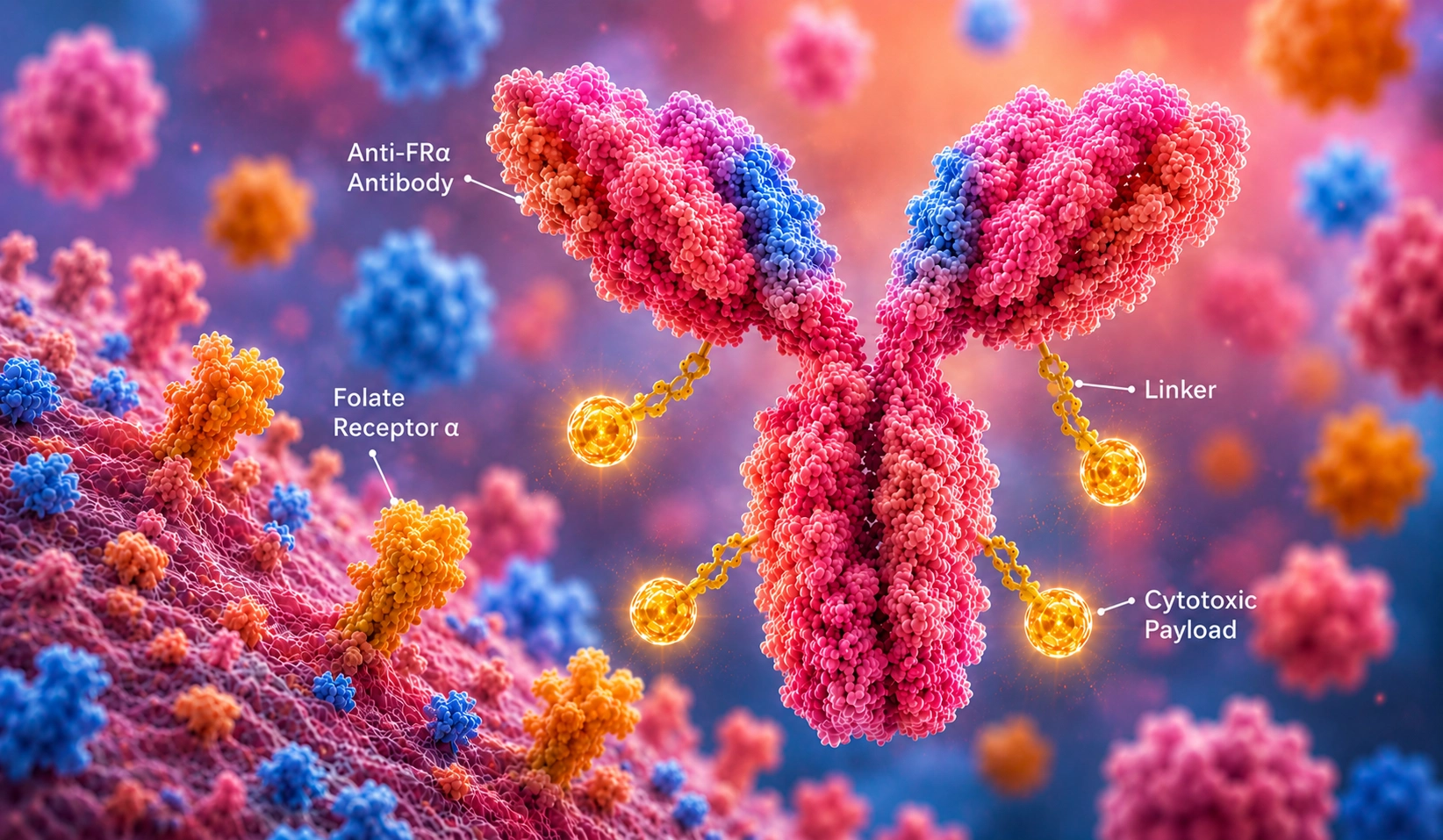
The FRα-directed ADC component of LFR-1103 consists of three key elements:
- An FRα-targeting monoclonal antibody
- A linker that connects the antibody to the payload
- A potent cytotoxic payload designed to kill cancer cells
Upon binding to FRα-expressing tumor cells, the ADC is internalized and releases its payload within the cancer cell, leading to targeted tumor cell death.
How FRα ADC Therapy Works
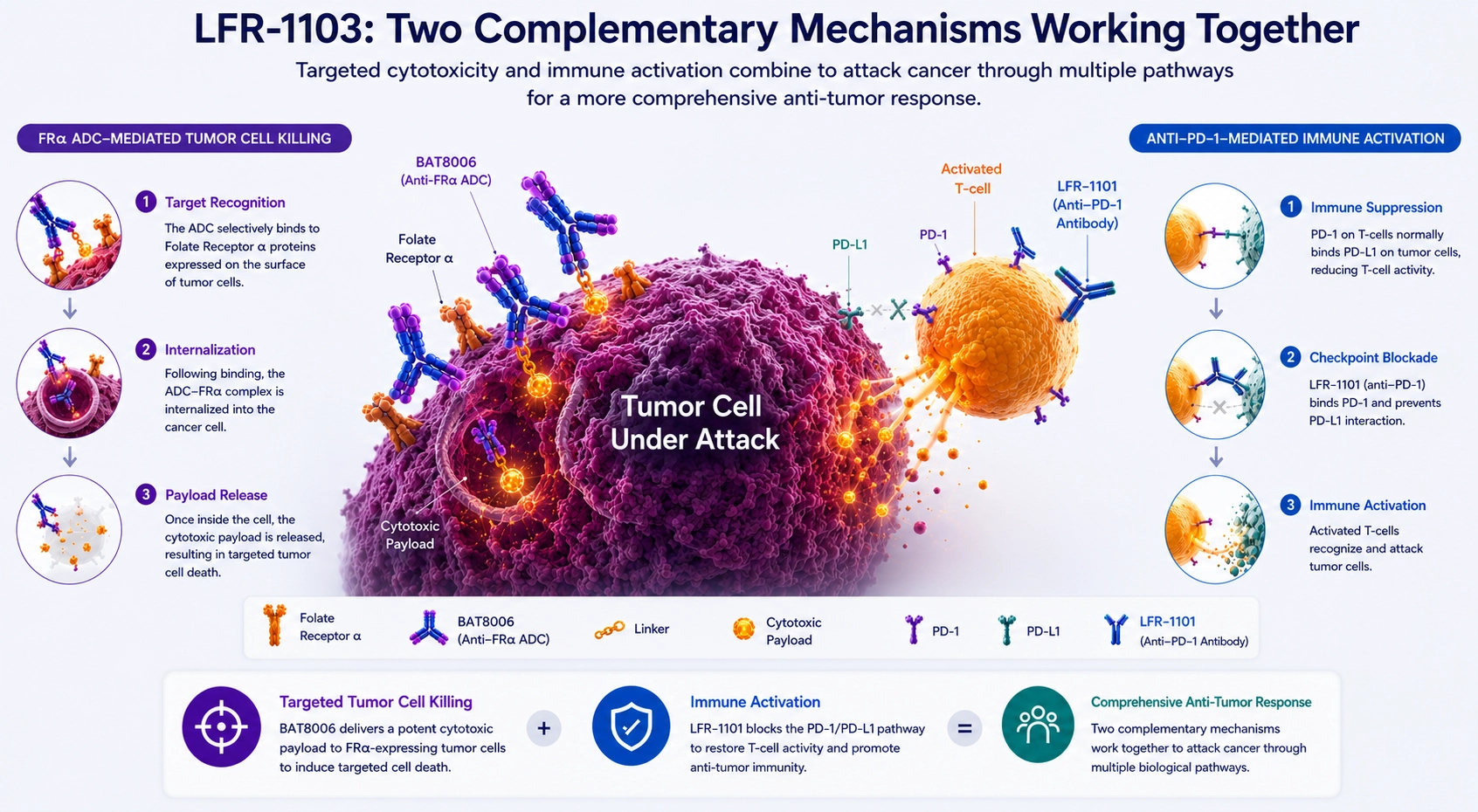
Antibody-drug conjugates are designed to deliver targeted therapy directly to cancer cells through a multi-step process.
01
Target Recognition
The ADC selectively binds to FRα proteins expressed on the surface of tumor cells.
02
Internalization
Following binding, the ADC-FRα complex is internalized into the cancer cell.
03
Payload Release
Once inside the cell, the cytotoxic payload is released, resulting in targeted tumor cell death.
Combining Two Complementary Approaches
LFR-1103 combines two established therapeutic strategies that attack cancer through complementary mechanisms.
The FRα-directed ADC component is designed to selectively deliver a cytotoxic payload to tumor cells, while the anti-PD-1 component is designed to help restore anti-tumor immune activity by blocking inhibitory checkpoint signaling.
Together, these approaches may provide a more comprehensive attack on cancer by combining direct tumor cell killing with activation of the immune response.
Targeted Tumor Cell Killing
The ADC component selectively targets FRα-expressing tumor cells and delivers a cytotoxic payload designed to induce cancer cell death.
Immune Checkpoint Blockade
The anti-PD-1 component is designed to restore T-cell activity and support the immune system’s ability to recognize and attack cancer cells.
Complementary Mechanisms
By combining targeted cytotoxic therapy with immune activation, LFR-1103 is designed to address cancer through multiple biological pathways.
Why Platinum-Resistant Ovarian Cancer?
Platinum-resistant ovarian cancer remains a significant treatment challenge and is associated with poor long-term outcomes following disease progression. Despite advances in targeted therapies and supportive care, many patients continue to face limited treatment options.
FRα expression has been observed in many ovarian cancers, making it an attractive target for ADC therapy. By combining FRα-directed ADC therapy with immune checkpoint inhibition, LFR-1103 is being developed to explore the potential benefits of dual-mechanism treatment in PROC.
Why Endometrial Cancer?
Endometrial cancer is one of the most common gynecologic malignancies worldwide. While many patients are diagnosed at an early stage, advanced or recurrent disease continues to represent an area of significant unmet medical need.
FRα expression has been observed in subsets of endometrial cancer, and immunotherapy has emerged as an important treatment modality in selected patients. LFR-1103 is being developed to combine these complementary approaches in endometrial cancer.
Why LFR-1103?
Combining Targeted Therapy and Immunotherapy
LFR-1103 brings together targeted ADC therapy and immune checkpoint inhibition to address cancer through complementary mechanisms.
Established Biological Targets
The program is built upon clinically validated FRα and PD-1 biology, both of which have emerged as important therapeutic targets in oncology.
Focused Development Strategy
Liferna is advancing LFR-1103 in gynecologic cancers where meaningful unmet medical need remains and where both ADC therapy and immunotherapy have demonstrated clinical relevance.
Expanding the Oncology Franchise
LFR-1103 represents an important extension of Liferna’s anti-PD-1 platform and further broadens the company’s oncology portfolio.
Clinical Studies
LFR-1103 is supported by publicly reported clinical experience with FRα-directed ADC therapy and PD-1 checkpoint inhibition. For additional information regarding clinical studies, development activities, and published data, please visit our Clinical Studies section.
Expanding the Oncology Franchise
LFR-1103 builds upon the foundation established by LFR-1101 and represents an important component of Liferna’s expanding oncology portfolio.
Related Programs