Understanding Endometrial Cancer
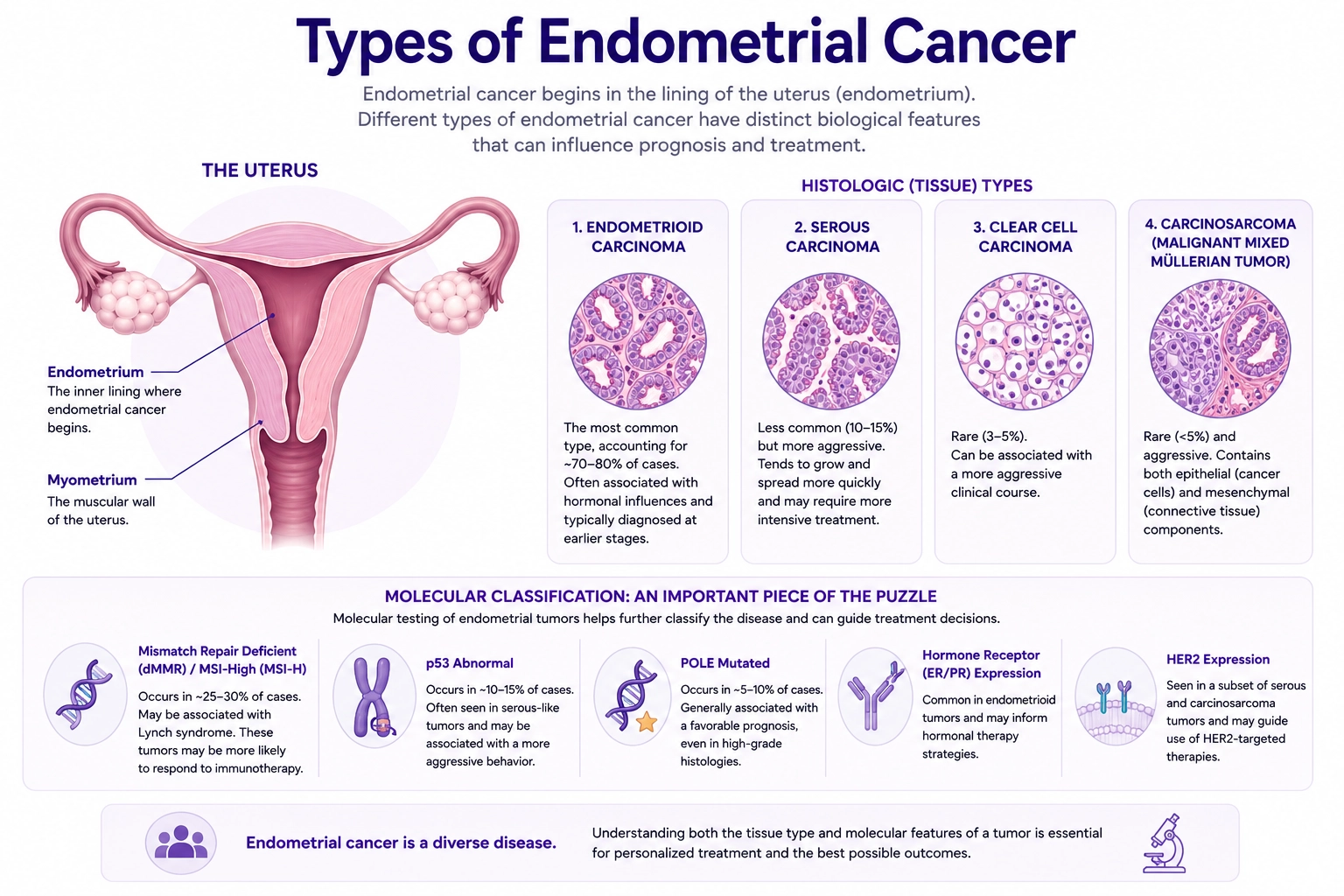
Endometrioid Carcinoma — The most common subtype of endometrial cancer. These tumors are often associated with hormonal influences and may be diagnosed at earlier stages.
Serous Carcinoma — A less common but more aggressive subtype that tends to behave differently from endometrioid tumors and may require more intensive treatment.
Clear Cell Carcinoma — A rare subtype that can be associated with a more aggressive clinical course.
Carcinosarcoma (Malignant Mixed Müllerian Tumor) — A rare and aggressive form of uterine cancer containing both epithelial and mesenchymal components.
Modern classification increasingly incorporates molecular features that may help guide treatment selection, including:
- Mismatch repair deficiency (dMMR) / microsatellite instability-high (MSI-H)
- p53 abnormalities
- POLE mutations
- Hormone receptor expression (ER/PR)
- HER2 expression in selected tumor types
These biomarkers may influence eligibility for immunotherapy and targeted treatment approaches.
Signs & Symptoms
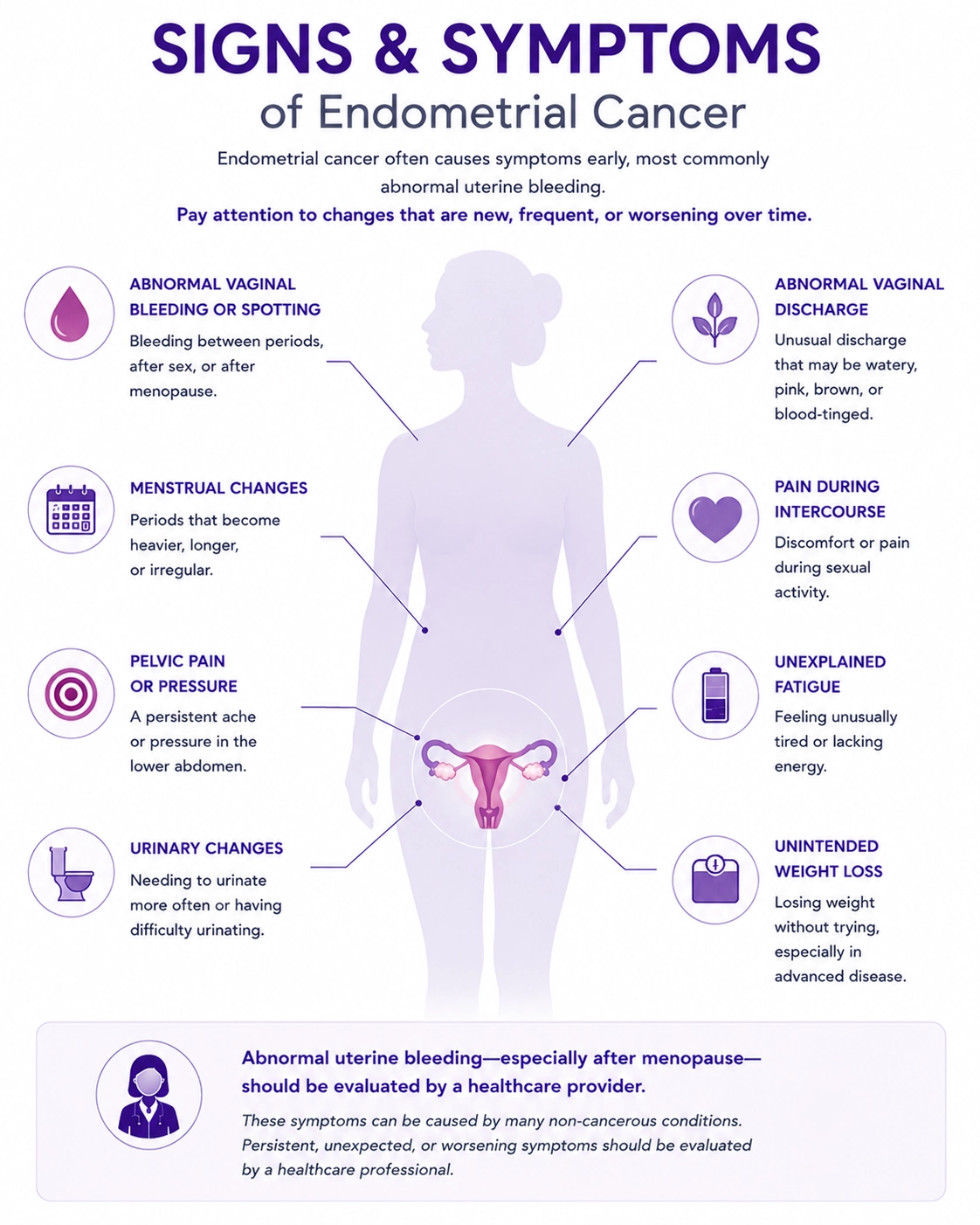
Endometrial cancer often presents with symptoms earlier than many other gynecologic cancers, which can contribute to diagnosis before the disease spreads beyond the uterus. The most common presenting symptom is abnormal uterine bleeding, particularly bleeding that occurs after menopause or changes from an individual’s usual menstrual pattern.
Symptoms can vary from person to person and may overlap with many common, non-cancerous gynecologic or hormonal conditions. Rather than focusing on any single symptom, it is often more important to pay attention to symptoms that are new, persistent, unexpected, or becoming more frequent over time.
The figure below highlights some of the more commonly reported signs and symptoms associated with endometrial cancer and is intended to help increase awareness of changes that may warrant medical evaluation.
Early evaluation may support earlier diagnosis and improved outcomes.
Risk Factors
Several factors may increase the risk of developing endometrial cancer, including:
Current Treatment Approaches
Why Immunotherapy?
Treatment for endometrial cancer is personalized based on the stage and type of cancer, molecular features of the tumor, prior treatment history, and overall health of the patient.