
Ovarian Cancer (OC)

Ovarian cancer is a gynecologic malignancy that develops in the ovaries, fallopian tubes, or surrounding tissues and remains one of the most serious cancers affecting women worldwide. Because symptoms can be subtle and non-specific in early stages, ovarian cancer is often diagnosed after the disease has already spread beyond the ovaries.

Each year, hundreds of thousands of women worldwide are diagnosed with ovarian cancer. Although advances in surgery, chemotherapy, targeted therapies, and immunotherapy continue to improve outcomes, recurrent disease remains common and significant unmet medical need persists—particularly for patients whose disease becomes resistant to platinum-based chemotherapy.

One of the most challenging forms of the disease is platinum-resistant ovarian cancer (PROC), where tumors progress during or shortly after platinum treatment and available therapeutic options may become more limited.

— Disease Biology

Understanding Ovarian Cancer
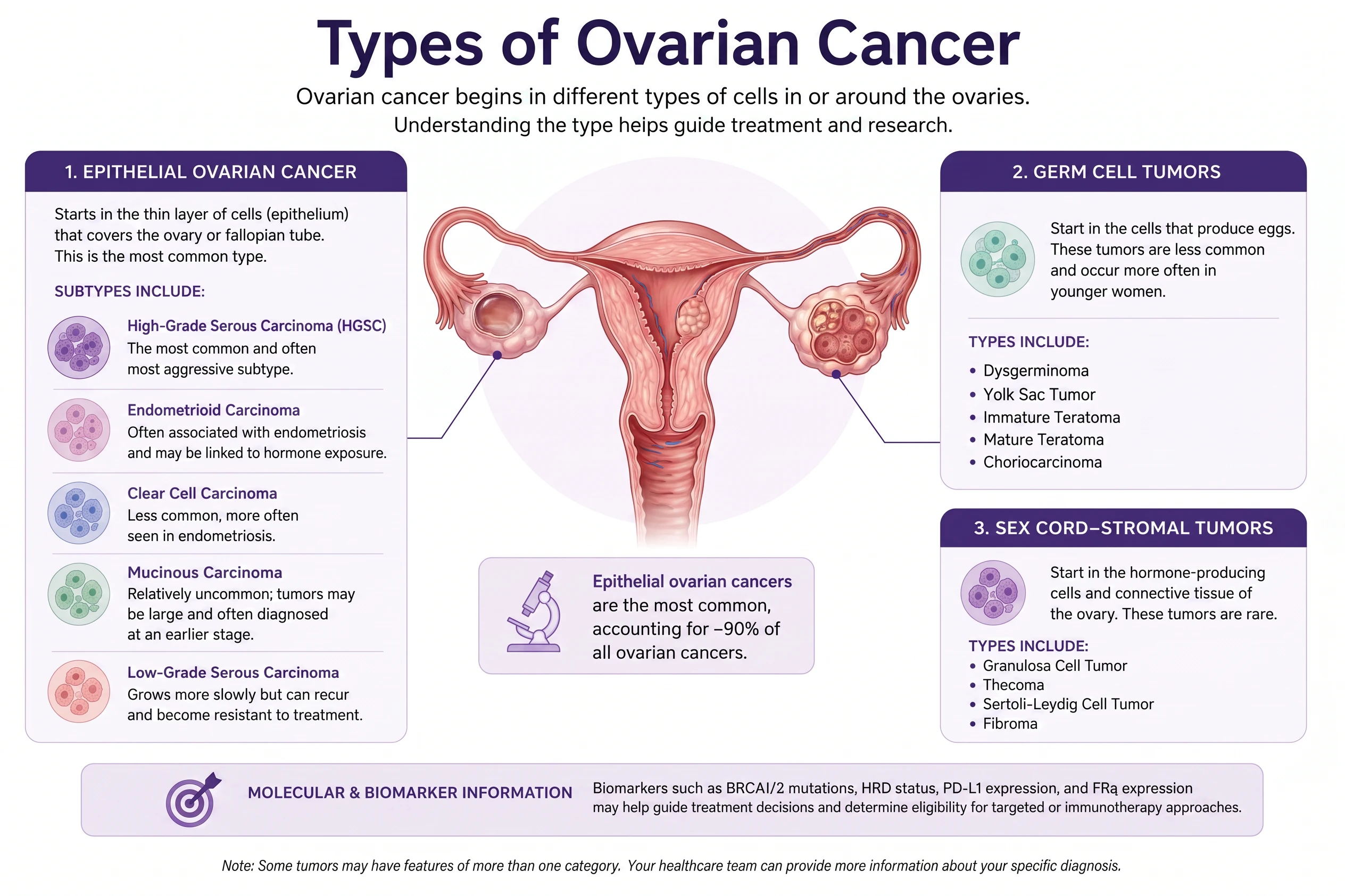
Ovarian cancer is not a single disease but rather a group of cancers that arise from different cell types and may behave differently clinically.

Epithelial Ovarian Cancer — The most common form of ovarian cancer, accounting for approximately 90% of cases. These tumors arise from cells covering the ovary or from the fallopian tube and include several subtypes.

Subtypes include:

  • High-Grade Serous Carcinoma (HGSC) — the most common and often most aggressive subtype.
  • Endometrioid Carcinoma
  • Clear Cell Carcinoma
  • Mucinous Carcinoma
  • Low-Grade Serous Carcinoma

Germ Cell Tumors — Less common tumors that develop from egg-producing cells and occur more frequently in younger women.

Sex Cord–Stromal Tumors — Rare tumors that arise from hormone-producing tissues within the ovary.

Platinum-Resistant Ovarian Cancer (PROC) — PROC refers to ovarian cancer that progresses during platinum-based chemotherapy or recurs within approximately six months following completion of platinum treatment. Patients with PROC may experience reduced responsiveness to standard chemotherapy and often require alternative treatment approaches.

Biomarkers That May Influence Treatment Decisions

Biomarkers increasingly influence treatment selection and may include:

  • PD-L1 expression
  • BRCA1/BRCA2 mutations
  • Homologous recombination deficiency (HRD)
  • Folate receptor alpha (FRα) expression
  • Additional emerging immune and molecular biomarkers
— Clinical Presentation

Signs & Symptoms

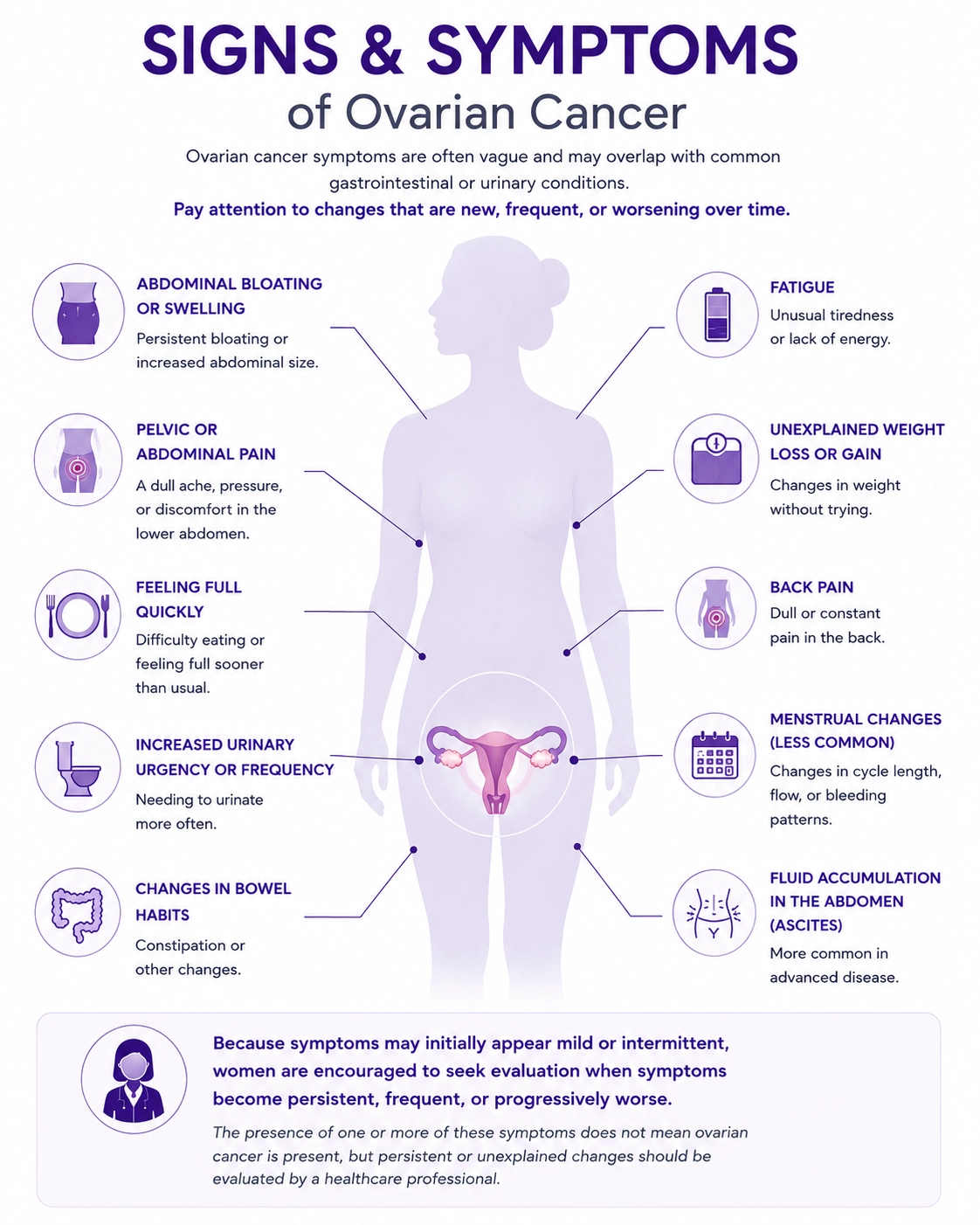
Ovarian cancer is sometimes referred to as a “silent disease,” not because symptoms are absent, but because they are often subtle, non-specific, and may resemble common gastrointestinal, urinary, or hormonal conditions. As a result, symptoms may be overlooked or attributed to less serious causes, which can contribute to delayed diagnosis.

While symptoms can vary from person to person, women with ovarian cancer often experience persistent changes that are new, occur more frequently, or gradually worsen over time. The figure below highlights some of the more commonly reported signs and symptoms associated with ovarian cancer.

Because early symptoms may appear mild or intermittent, it is important to pay attention to patterns rather than isolated episodes. Women are encouraged to speak with their healthcare provider if symptoms become persistent, progressive, or interfere with daily activities.

The presence of one or more of these symptoms does not mean ovarian cancer is present, but persistent or unexplained changes should be evaluated by a healthcare professional.
— Prevention & Risk

Risk Factors

Several factors may increase the risk of developing ovarian cancer, including:

01
Increasing age
02
Family history of ovarian, breast, or related cancers
03
Inherited genetic mutations (including BRCA1 and BRCA2)
04
Personal history of breast cancer
05
Endometriosis
06
Hormone replacement therapy in certain settings
07
Obesity
08
Never having carried a pregnancy (nulliparity)
Protective factors may include pregnancy, breastfeeding, and certain hormonal contraceptives.
— Treatment Landscape

Current Treatment Approaches

— Immunotherapy

Why Immunotherapy?

Cancer cells may avoid immune detection through immune checkpoint pathways such as PD-1/PD-L1 signaling. Anti-PD-1 therapies are designed to help restore the immune system’s ability to recognize and attack cancer cells.

— The Science Behind It

Although ovarian cancer has historically shown variable responsiveness to immunotherapy alone, emerging research suggests that combining immune checkpoint inhibition with other therapeutic approaches—including targeted therapies and antibody-drug conjugates—may enhance anti-tumor activity and improve outcomes for selected patients. This strategy is of particular interest in difficult-to-treat settings such as recurrent and platinum-resistant ovarian cancer.

Treatment for ovarian cancer is personalized based on the stage of disease, tumor characteristics, and patient factors.


SURGERY
Surgery is often the first step in treatment and may include removal of the ovaries, fallopian tubes, uterus, omentum, and nearby tissues to remove as much cancer as possible.
Surgery may be done to stage the cancer or to reduce symptoms and improve the effectiveness of other treatments.
CHEMOTHERAPY
Chemotherapy uses drugs to kill cancer cells or stop them from growing.
Platinum-based chemotherapy is the standard first-line treatment for many women with ovarian cancer. It may be given before surgery (neoadjuvant) or after surgery (adjuvant).
TARGETED THERAPIES
Targeted therapies focus on specific molecules involved in cancer growth.
Examples include: PARP inhibitors (e.g., olaparib, niraparib); Anti-angiogenic agents (e.g., bevacizumab); Antibody-drug conjugates (investigational or approved in certain settings).
IMMUNOTHERAPY
Immunotherapy helps the immune system recognize and attack cancer cells.
PD-1/PD-L1 inhibitors are being studied in ovarian cancer, alone or in combination with other therapies, to improve outcomes for select patients.
SUPPORTIVE CARE
Supportive care focuses on relieving symptoms and maintaining quality of life during and after treatment.
This may include pain management, nutritional support, emotional support, and help managing side effects.
A team of specialists—including gynecologic oncologists, medical oncologists, radiation oncologists, pathologists, genetic counselors, and supportive care experts—works together to create a personalized plan for each patient.
— Liferna Program
Liferna is evaluating investigational immuno-oncology approaches for the treatment of multiple solid tumors, including ovarian cancer. As part of its broader oncology strategy, Liferna is exploring therapies designed to enhance anti-tumor immune responses and may evaluate combination approaches intended to address areas of persistent unmet need, including platinum-resistant ovarian cancer.