Harnessing the Immune System to Fight Cancer
The immune system plays a critical role in identifying and eliminating abnormal cells. However, many cancers develop mechanisms that suppress immune responses, allowing tumors to evade detection and continue growing.
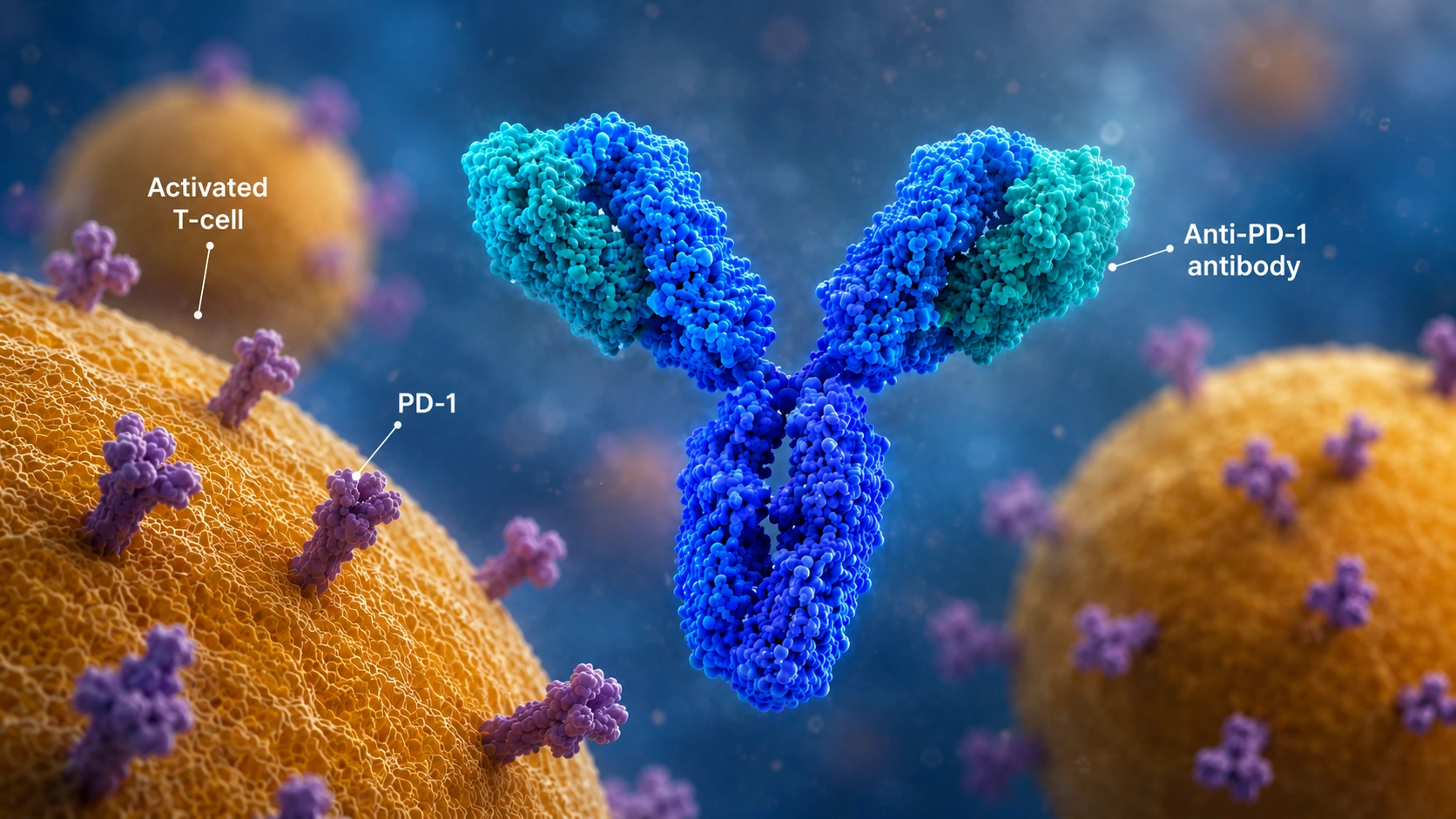
One of the most important immune regulatory pathways involves Programmed Cell Death Protein 1 (PD-1), a checkpoint receptor expressed on activated T-cells. When PD-1 interacts with its ligands, immune activity can become suppressed, reducing the body’s ability to mount an effective anti-tumor response.
LFR-1101 is designed to block the PD-1 pathway and help restore T-cell activity, supporting the immune system’s natural ability to recognize and attack cancer cells.
Supporting the Immune Response Against Cancer
This illustration depicts an activated T-cell engaging a tumor cell within the tumor microenvironment. Some cancers can suppress the immune system’s ability to recognize and attack abnormal cells. LFR-1101 is designed to block the PD-1 immune checkpoint pathway, helping restore the immune response and support the body’s natural ability to fight cancer.
LFR-1101 is designed to block the PD-1 pathway and help restore T-cell activity, supporting the immune system’s natural ability to recognize and attack cancer cells.
Mechanism of Action
PD-1 functions as an immune checkpoint that helps regulate immune activity and prevent excessive immune responses. Many tumors exploit this pathway to evade immune surveillance.
LFR-1101 binds to PD-1 receptors expressed on activated T-cells and blocks inhibitory signaling. By preventing PD-1-mediated suppression, LFR-1101 is designed to enhance anti-tumor immune activity and support sustained T-cell responses against cancer cells.
How LFR-1101 Works
The PD-1 pathway serves as a natural brake on immune activity. Many cancers exploit this mechanism to suppress T-cell function and avoid detection by the immune system. LFR-1101 is designed to block PD-1 signaling, helping restore anti-tumor immune activity and support T-cell recognition of cancer cells.
Why Cervical Cancer?
Despite advances in prevention and screening, cervical cancer remains a significant global health challenge. Patients with recurrent, persistent, or metastatic disease often face limited treatment options and poor long-term outcomes.
Immune checkpoint inhibition has emerged as an important therapeutic approach in cervical cancer, where the tumor microenvironment may support immune evasion through PD-1 pathway activation.
By targeting PD-1, LFR-1101 is being developed to help restore anti-tumor immune responses and support improved outcomes for patients with cervical cancer.
Why LFR-1101?
LFR-1101 combines a clinically validated immuno-oncology mechanism with a focused development strategy designed to address significant unmet need in cervical cancer. As the foundation of Liferna’s oncology portfolio, LFR-1101 supports both near-term development opportunities and future combination strategies across multiple tumor types.
Established Biology
PD-1 is one of the most extensively studied and clinically validated targets in oncology. Immune checkpoint inhibition has transformed the treatment landscape across numerous cancers and established PD-1 blockade as a foundational immunotherapy approach.
Clinical Foundation
LFR-1101 is based on a clinically evaluated anti-PD-1 monoclonal antibody with publicly reported clinical experience, providing a strong foundation for continued development in cervical cancer.
Focused Development Strategy
Liferna is advancing LFR-1101 with a focused development approach centered on cervical cancer, an area where meaningful unmet medical need remains and where immunotherapy has emerged as an important treatment modality.
Oncology Franchise Platform
LFR-1101 serves as the immunotherapy backbone of Liferna’s expanding oncology portfolio. The program supports future combination strategies designed to further enhance anti-tumor activity and broaden potential opportunities across multiple tumor types.
Clinical Studies
Building on established PD-1 biology to advance innovative immunotherapy approaches for patients with cervical cancer. LFR-1101 is supported by publicly reported clinical experience and is being advanced as part of Liferna’s expanding oncology portfolio. For additional information regarding clinical studies, development activities, and published data, please visit our Clinical Studies section.
Expanding the Oncology Franchise
LFR-1101 serves as the foundation of Liferna’s oncology franchise, supporting a long-term development strategy that includes expansion into additional cancer indications as both a monotherapy and in combination with other anti-cancer agents to address a broad range of oncology opportunities.