Triple Negative Breast Cancer (TNBC)

Breast cancer is one of the most commonly diagnosed cancers worldwide and develops when abnormal cells within the breast grow uncontrollably and form a tumor. While outcomes have improved substantially over recent decades due to advances in screening, earlier diagnosis, and new treatment options, breast cancer remains an important area of unmet medical need—particularly in aggressive or difficult-to-treat subtypes.

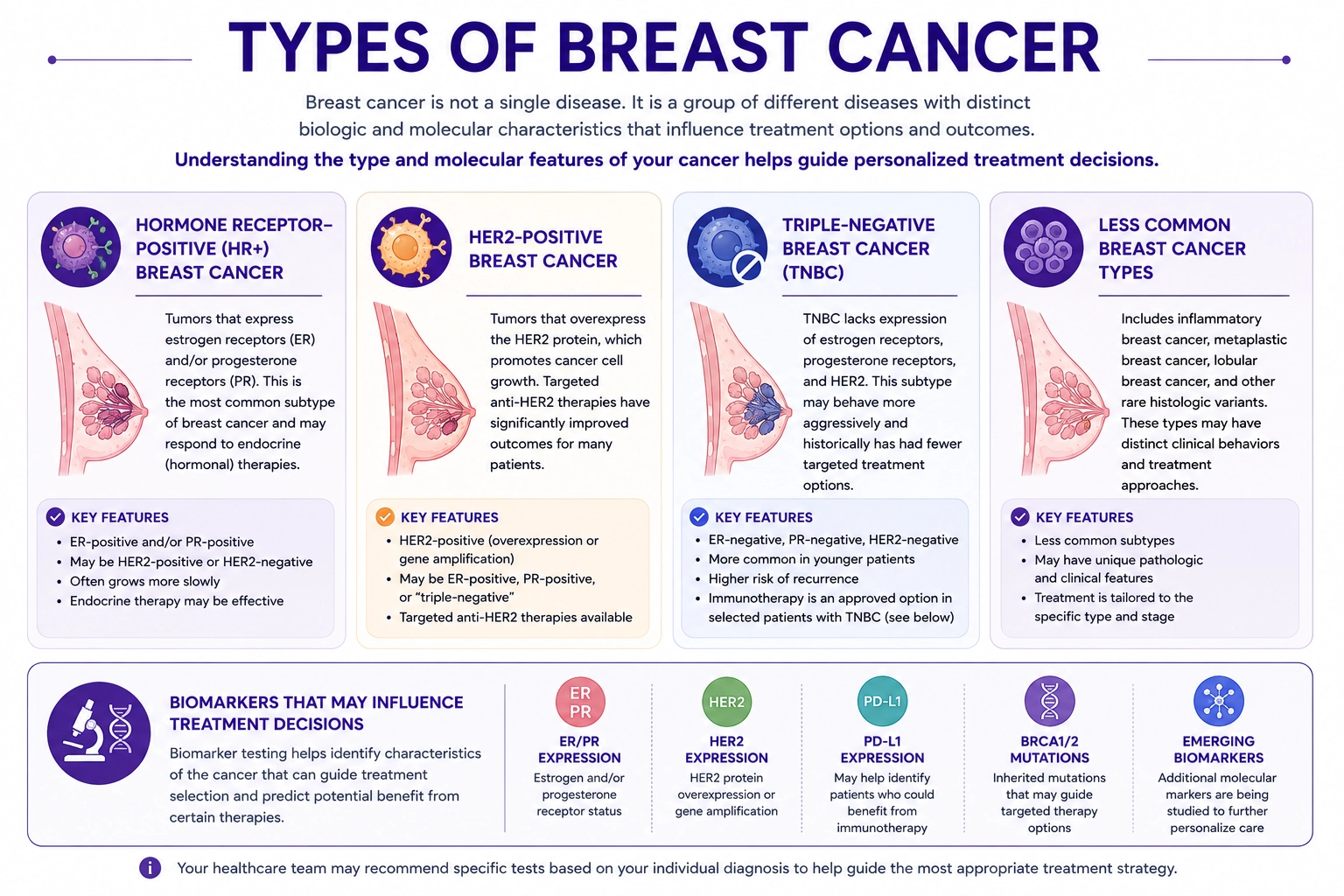
Breast cancer is not a single disease but rather a collection of biologically distinct tumor types with different treatment approaches and clinical outcomes. Increasing use of molecular testing and precision medicine is helping guide more personalized treatment decisions and improve patient care.

— Disease Biology

Understanding Breast Cancer

Breast cancer can arise from different tissues within the breast and may be classified based on both histology and molecular characteristics.

Hormone Receptor–Positive (HR+) Breast Cancer — Tumors that express estrogen receptors (ER) and/or progesterone receptors (PR). This is the most common subtype and may respond to endocrine (hormonal) therapies.

HER2-Positive Breast Cancer — Tumors that overexpress the HER2 protein, which promotes tumor growth. Targeted anti-HER2 therapies have significantly improved outcomes for many patients.

Triple-Negative Breast Cancer (TNBC) — TNBC lacks expression of estrogen receptors, progesterone receptors, and HER2. This subtype may behave more aggressively and historically has had fewer targeted treatment options available compared with other breast cancer types. Recent advances in immunotherapy and targeted treatment strategies are helping expand options for selected patients with TNBC.

Less Common Breast Cancer Types — Additional subtypes include inflammatory breast cancer, metaplastic breast cancer, and certain rare histologic variants.
Biomarkers That May Influence Treatment Decisions

Biomarkers that may influence treatment decisions include:

  • Estrogen receptor (ER) expression
  • Progesterone receptor (PR) expression
  • HER2 expression
  • PD-L1 expression
  • BRCA1/BRCA2 mutations
  • Emerging molecular biomarkers
— Clinical Presentation

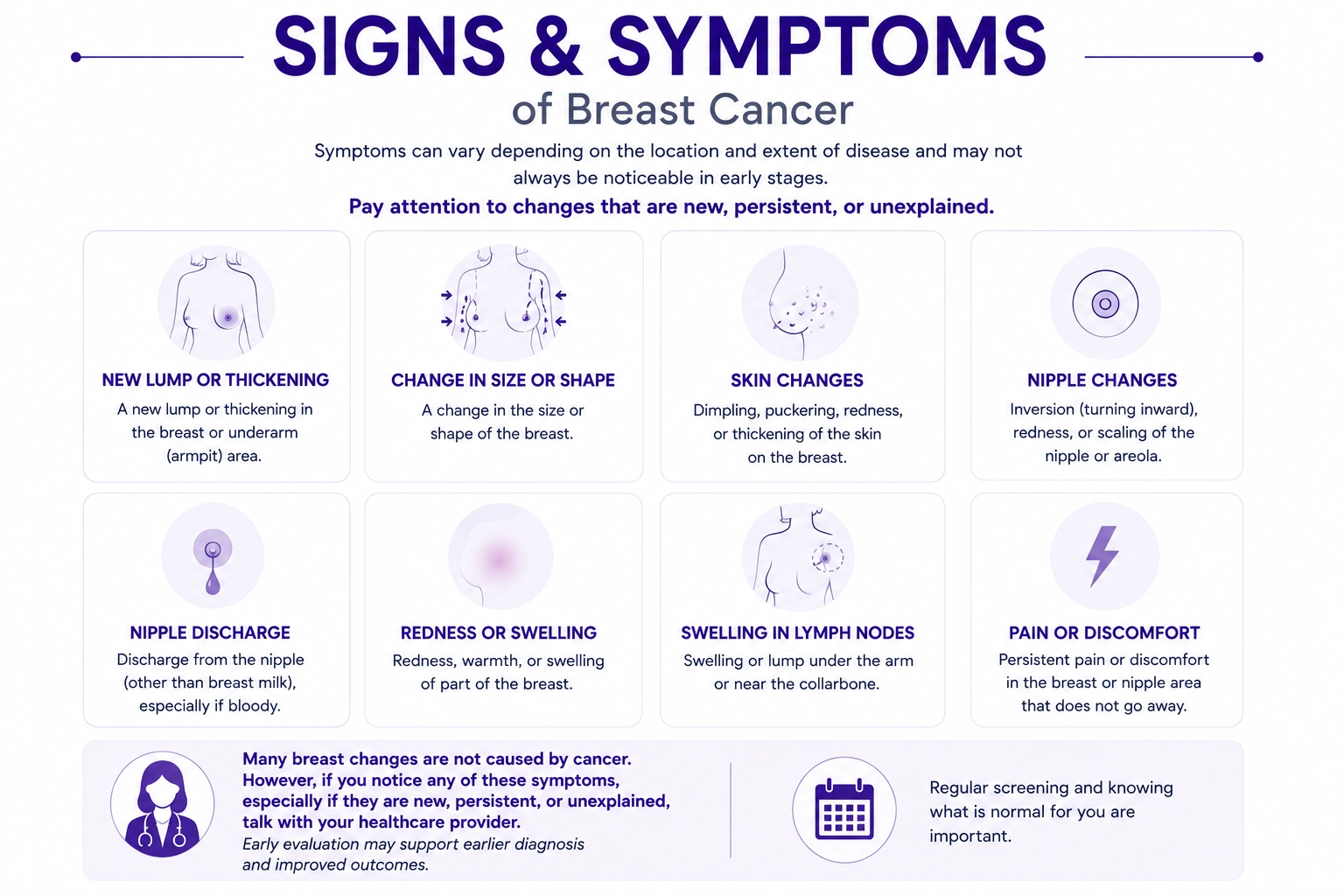
Signs & Symptoms

Breast cancer can present differently from person to person and may not always cause noticeable symptoms in its earliest stages. Some changes are discovered during routine screening, while others may become apparent through new physical changes in the breast or surrounding areas.

Rather than focusing on any single symptom in isolation, it is often more helpful to pay attention to changes that are new, persistent, unusual for you, or becoming more noticeable over time. The figure below highlights some of the more commonly recognized signs and symptoms associated with breast cancer and is intended to support awareness and earlier recognition.

Importantly, many breast changes occur for reasons unrelated to cancer and are frequently caused by non-cancerous conditions. However, changes that persist or feel different from your normal baseline should be discussed with a healthcare provider.


Regular screening and awareness of what is normal for your body may support earlier detection and improved outcomes.

— Prevention & Risk

Risk Factors

Several factors may increase the risk of developing breast cancer, including:

01
Increasing age
02
Family history of breast or ovarian cancer
03
Inherited genetic mutations (including BRCA1 and BRCA2)
04
Prior radiation exposure
05
Hormonal influences
06
Obesity
07
Alcohol consumption
08
Limited physical activity
Protective factors may include maintaining a healthy weight, physical activity, and participation in appropriate screening programs.
— Treatment Landscape

Current Treatment Approaches

— Immunotherapy

Why Immunotherapy?

Cancer cells can sometimes avoid immune detection by suppressing normal immune responses through immune checkpoint pathways such as PD-1/PD-L1 signaling. Immunotherapy is designed to help restore the immune system’s ability to recognize and attack cancer cells.

— The Science Behind It
Among breast cancer subtypes, triple-negative breast cancer (TNBC) has emerged as an area of particular interest for immunotherapy development. TNBC tends to demonstrate greater immune involvement than some other breast cancer subtypes and may respond to immune checkpoint inhibition in selected patients. Combination approaches involving immunotherapy together with chemotherapy, targeted therapies, and antibody-drug conjugates continue to be evaluated with the goal of improving outcomes for patients with TNBC.

Treatment for breast cancer is personalized based on the type and stage of cancer, tumor characteristics (biomarkers), prior treatments, and your overall health and preferences.

SURGERY
Surgery is often the first approach for most patients.
It may include removal of the breast tumor (lumpectomy) or the entire breast (mastectomy), and evaluation of nearby lymph nodes.
RADIATION THERAPY
Radiation therapy may be used after surgery to reduce the risk of recurrence.
It may also be used as treatment for certain patients who are not surgical candidates or who have recurrent disease.
CHEMOTHERAPY
Chemotherapy may be recommended for advanced-stage disease, aggressive histologies, or recurrent disease.
It can be used alone or in combination with other treatment approaches.
TARGETED THERAPY
Targeted therapies focus on specific molecules or pathways that contribute to cancer growth.
These therapies may be used in specific molecular subtypes or when other treatments are no longer effective.
IMMUNOTHERAPY
Immune checkpoint inhibitors help the immune system recognize and attack cancer cells.
Immunotherapy is approved for certain patients with specific subtypes of breast cancer.
A multidisciplinary care team works with each patient to develop the most appropriate treatment plan.
— Liferna Program
Liferna is evaluating investigational immuno-oncology approaches for the treatment of solid tumors, including breast cancer. As part of its broader oncology strategy, Liferna’s current breast cancer focus is centered on triple-negative breast cancer (TNBC) and exploring approaches designed to enhance anti-tumor immune responses in areas of persistent unmet medical need.