Endometrial Cancer

Endometrial cancer is a gynecologic malignancy that develops in the lining of the uterus, known as the endometrium. It is the most common gynecologic cancer in developed countries and is most frequently diagnosed after menopause, although it can occur at younger ages as well.

Many cases are identified at an early stage because abnormal uterine bleeding often develops early in the course of disease. While outcomes are generally favorable when detected early, recurrent and advanced endometrial cancer remain areas of significant unmet medical need.

Advances in molecular profiling, immunotherapy, and targeted treatment approaches are helping to reshape the treatment landscape and support more personalized care for patients with advanced disease.

— Disease Biology

Understanding Endometrial Cancer

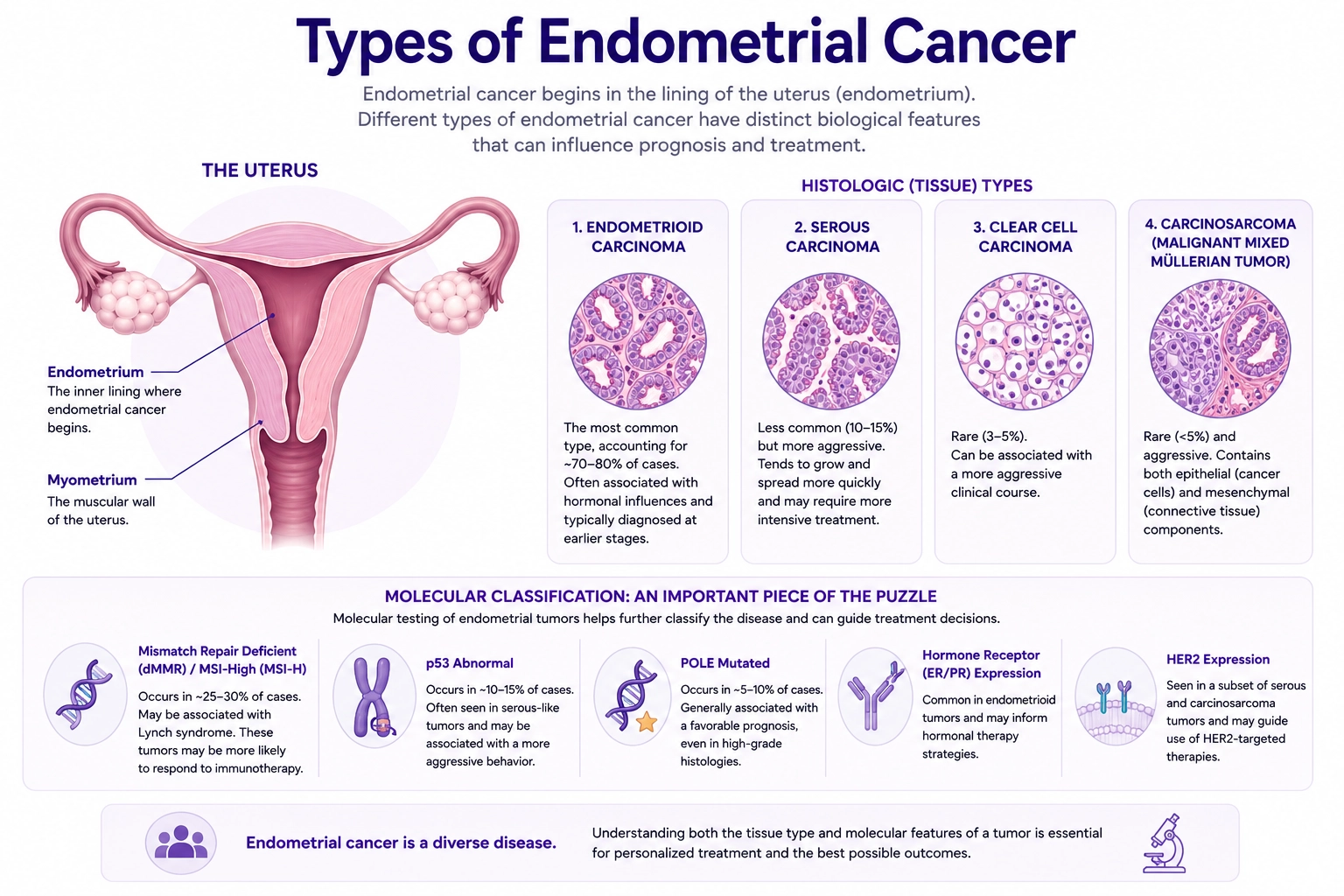
Endometrial cancer is not a single disease but rather a group of tumors with distinct biologic and molecular characteristics that may influence prognosis and treatment decisions.

Endometrioid Carcinoma — The most common subtype of endometrial cancer. These tumors are often associated with hormonal influences and may be diagnosed at earlier stages.

Serous Carcinoma — A less common but more aggressive subtype that tends to behave differently from endometrioid tumors and may require more intensive treatment.

Clear Cell Carcinoma — A rare subtype that can be associated with a more aggressive clinical course.

Carcinosarcoma (Malignant Mixed Müllerian Tumor) — A rare and aggressive form of uterine cancer containing both epithelial and mesenchymal components.

Molecularly Defined Endometrial Cancer

Modern classification increasingly incorporates molecular features that may help guide treatment selection, including:

  • Mismatch repair deficiency (dMMR) / microsatellite instability-high (MSI-H)
  • p53 abnormalities
  • POLE mutations
  • Hormone receptor expression (ER/PR)
  • HER2 expression in selected tumor types

These biomarkers may influence eligibility for immunotherapy and targeted treatment approaches.

— Clinical Presentation

Signs & Symptoms

Endometrial cancer often presents with symptoms earlier than many other gynecologic cancers, which can contribute to diagnosis before the disease spreads beyond the uterus. The most common presenting symptom is abnormal uterine bleeding, particularly bleeding that occurs after menopause or changes from an individual’s usual menstrual pattern.

Symptoms can vary from person to person and may overlap with many common, non-cancerous gynecologic or hormonal conditions. Rather than focusing on any single symptom, it is often more important to pay attention to symptoms that are new, persistent, unexpected, or becoming more frequent over time.

The figure below highlights some of the more commonly reported signs and symptoms associated with endometrial cancer and is intended to help increase awareness of changes that may warrant medical evaluation.
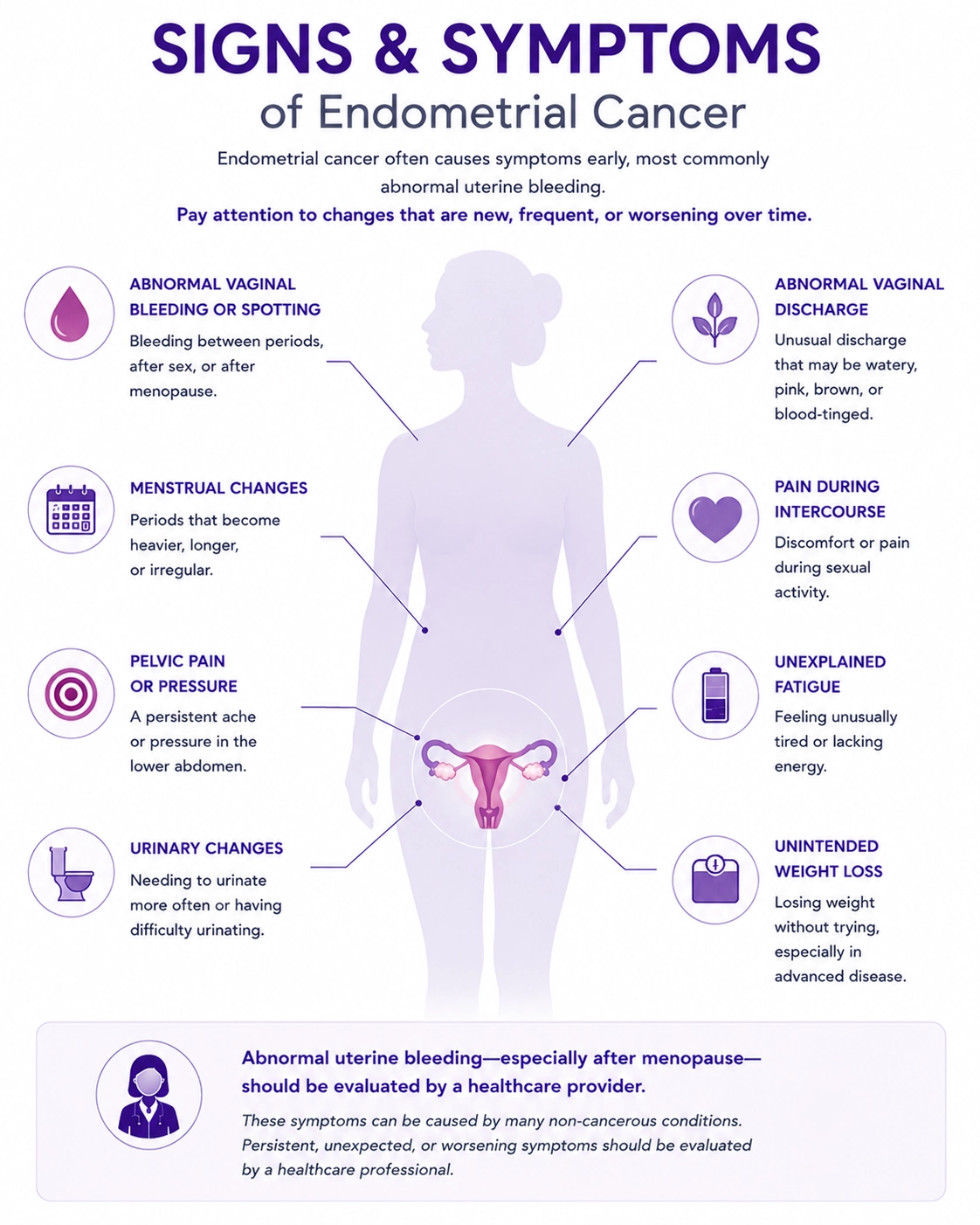
Because these symptoms can occur for reasons unrelated to cancer, experiencing one or more symptoms does not mean cancer is present. However, persistent or unexplained symptoms—especially abnormal uterine bleeding—should be discussed with a healthcare provider.

Early evaluation may support earlier diagnosis and improved outcomes.
— Prevention & Risk

Risk Factors

Several factors may increase the risk of developing endometrial cancer, including:

01
Increasing age
02
Obesity
03
Exposure to estrogen without progesterone
04
Early menstruation or late menopause
05
Never having carried a pregnancy (nulliparity)
06
Polycystic ovary syndrome (PCOS)
07
Diabetes
08
Family history of endometrial or colorectal cancer
09
Inherited syndromes such as Lynch syndrome
10
Prior tamoxifen exposure in certain settings
Protective factors may include physical activity, healthy weight maintenance, and some hormonal contraceptives.
— Treatment Landscape

Current Treatment Approaches

— Immunotherapy

Why Immunotherapy?

Cancer cells can sometimes avoid detection by suppressing normal immune responses through checkpoint pathways. Immunotherapy is designed to help restore the immune system’s ability to recognize and attack cancer cells.
— The Science Behind It
In endometrial cancer, tumors with certain molecular characteristics—particularly dMMR/MSI-H status—may be more responsive to immune checkpoint inhibition. Combination approaches involving immunotherapy and targeted therapies are also being explored to improve outcomes across broader patient populations.

Treatment for endometrial cancer is personalized based on the stage and type of cancer, molecular features of the tumor, prior treatment history, and overall health of the patient.

SURGERY
Surgery is often the first approach for most patients.
It may include removal of the uterus, cervix, fallopian tubes, and ovaries (hysterectomy with bilateral salpingo-oophorectomy), and evaluation of nearby lymph nodes.
RADIATION THERAPY
Radiation therapy may be used after surgery to reduce the risk of recurrence.
It may also be used as treatment for certain patients who are not surgical candidates or who have recurrent disease.
CHEMOTHERAPY
Chemotherapy may be recommended for advanced-stage disease, aggressive histologies, or recurrent disease.
It can be used alone or in combination with other treatment approaches.
TARGETED THERAPY
Targeted therapies focus on specific molecules or pathways that contribute to cancer growth.
These therapies may be used in specific molecular subtypes or when other treatments are no longer effective.
IMMUNOTHERAPY
Immune checkpoint inhibitors help the immune system recognize and attack cancer cells.
Immunotherapy is approved for certain patients with mismatch repair–deficient (dMMR) or MSI-high (MSI-H) endometrial cancer.
A multidisciplinary care team works with each patient to develop the most appropriate treatment plan.
— Liferna Program
Liferna is evaluating investigational immuno-oncology approaches for the treatment of multiple solid tumors, including gynecologic cancers. As part of its broader oncology strategy, Liferna is exploring therapies designed to enhance anti-tumor immune responses and support more personalized treatment approaches in areas of persistent unmet medical need.