

— Disease Biology
Understanding Systemic Sclerosis
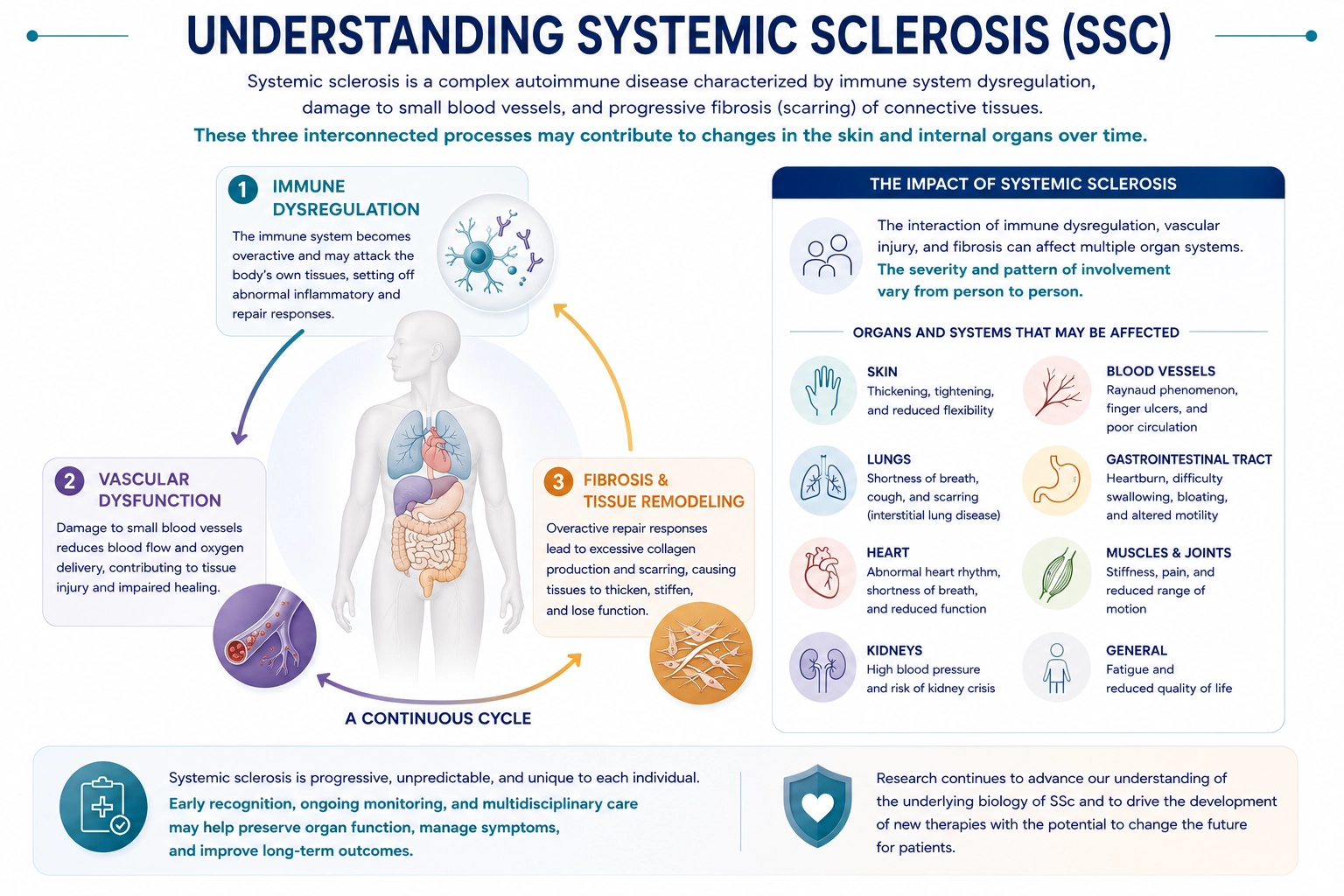
Systemic sclerosis is increasingly understood as a disease driven by the interaction of three interconnected biological processes:
- Immune dysregulation
- Microvascular injury and dysfunction
- Progressive fibrosis and tissue remodeling
Together, these processes contribute to changes in skin, blood vessels, and internal organs over time.
Understanding Systemic Sclerosis
In SSc, immune activation and vascular injury are believed to trigger abnormal repair responses within connective tissues.
Cells called fibroblasts become overactive and produce excessive amounts of collagen and extracellular matrix proteins. Rather than supporting normal healing, this process may lead to progressive thickening and stiffening of tissues.
As fibrosis progresses, affected tissues may become less flexible and organs may function less efficiently.
Potential consequences may include:
- Tightening and thickening of the skin
- Reduced hand mobility and dexterity
- Digestive symptoms
- Breathing difficulties
- Reduced circulation to the fingers and toes
- Progressive internal organ involvement
Disease Subtypes
SSc includes several clinical presentations.
Limited Cutaneous Systemic Sclerosis (lcSSc) — Typically involves skin changes affecting the hands, forearms, feet, lower legs, and face. Disease progression may occur gradually over time and vascular complications may become prominent.
Diffuse Cutaneous Systemic Sclerosis (dcSSc) — Associated with broader skin involvement and a greater likelihood of earlier internal organ involvement, including lung disease.
Systemic Sclerosis Without Skin Thickening (Sine Scleroderma) — A less common presentation in which internal organ and vascular manifestations occur despite minimal visible skin involvement.
Clinical Assessment and Monitoring
Because SSc may affect multiple organ systems, evaluation often extends beyond skin assessment.
Common monitoring approaches may include:
- Skin assessment (including modified Rodnan Skin Score)
- Autoantibody testing
- Pulmonary function testing (PFT)
- High-resolution computed tomography (HRCT)
- Echocardiography
- Kidney function monitoring
- Gastrointestinal assessment
- Functional and quality-of-life evaluations
Monitoring may help identify disease progression and support treatment decisions.
- Autoimmune activation
- Endothelial and vascular injury
- Fibroblast activation
- Excess collagen production
- Extracellular matrix accumulation
- Pro-fibrotic signaling pathways (including TGF-β)
- Tissue remodeling and fibrosis
These pathways remain areas of active therapeutic investigation.
Signs & Symptoms
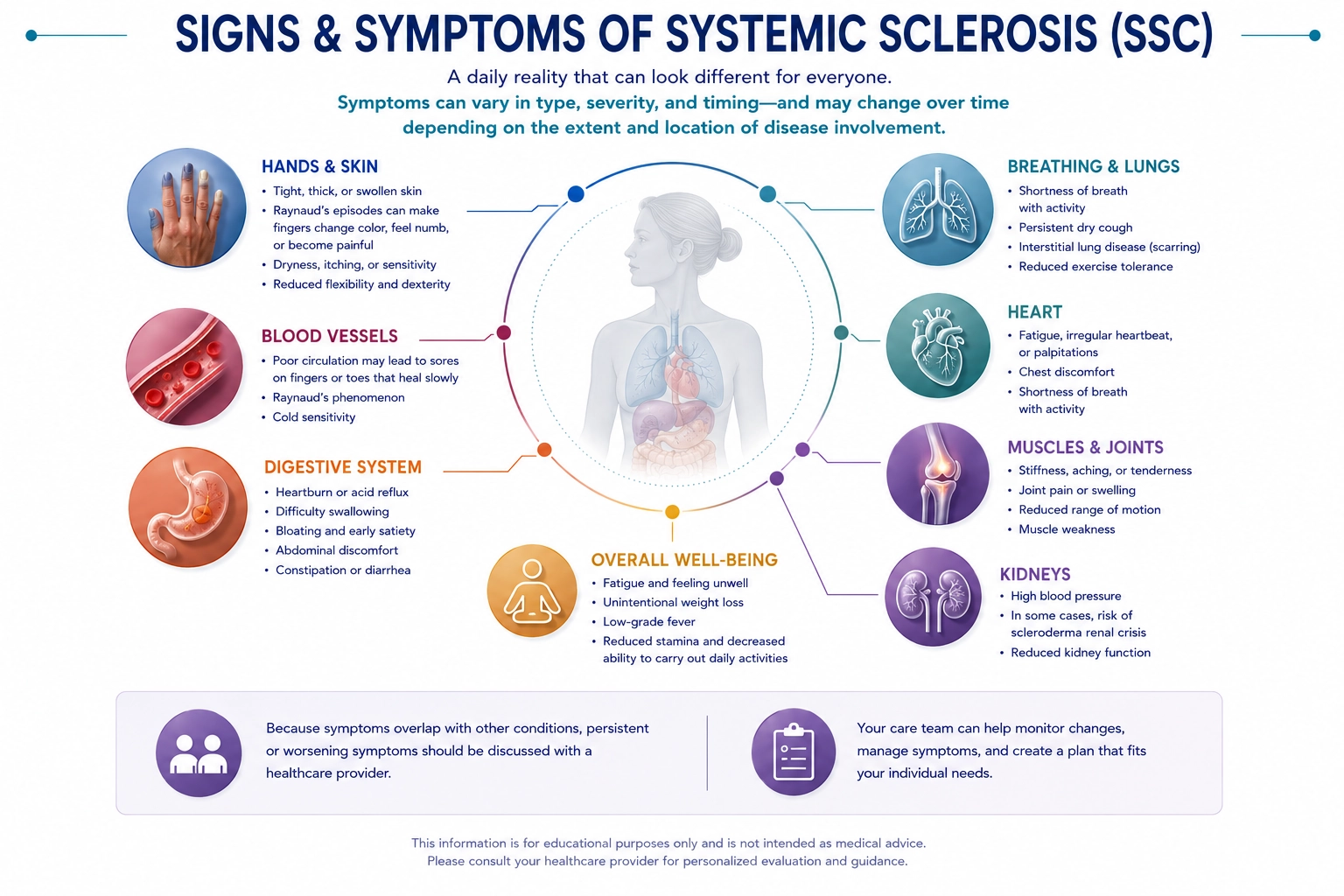
For many people, the earliest changes associated with systemic sclerosis are not dramatic—they may appear as small shifts in how the body feels, responds, or functions day to day. Symptoms can emerge gradually and may affect different areas of the body at different times, making the overall pattern difficult to recognize early on.
Some people first notice changes involving their hands or circulation, while others experience digestive symptoms, fatigue, changes in breathing, or increasing stiffness and discomfort. Because no two experiences are exactly alike, symptoms can evolve differently from one person to another.
The figure below highlights examples of how systemic sclerosis may appear across different body systems and illustrates the broad range of ways the disease can affect daily life.
Recognizing patterns over time—not any single symptom alone—may support earlier evaluation and more individualized care.
Risk Factors
Factors associated with increased risk of developing SSc may include:
Current Treatment Approaches





Why Disease Modification?
Systemic sclerosis is increasingly recognized as more than a skin disease—it is a complex systemic condition involving immune activation, vascular dysfunction, and fibrosis. Modern therapeutic strategies aim not only to manage symptoms but also to address biological processes that may contribute to disease progression and long-term organ damage.