Non-Small Cell Lung Cancer (NSCLC) is the most common type of lung cancer and accounts for the majority of lung cancer diagnoses worldwide. NSCLC develops when abnormal cells in the lungs grow uncontrollably and form tumors that may interfere with normal breathing and lung function.
Although outcomes have improved substantially over recent decades due to advances in screening, molecular testing, targeted therapies, and immunotherapy, NSCLC remains one of the leading causes of cancer-related mortality worldwide.
NSCLC is not a single disease but rather a collection of biologically distinct tumor types with different molecular drivers, treatment approaches, and clinical outcomes. Increasing use of precision medicine and biomarker-guided treatment selection is helping support more personalized care and improve outcomes for patients.
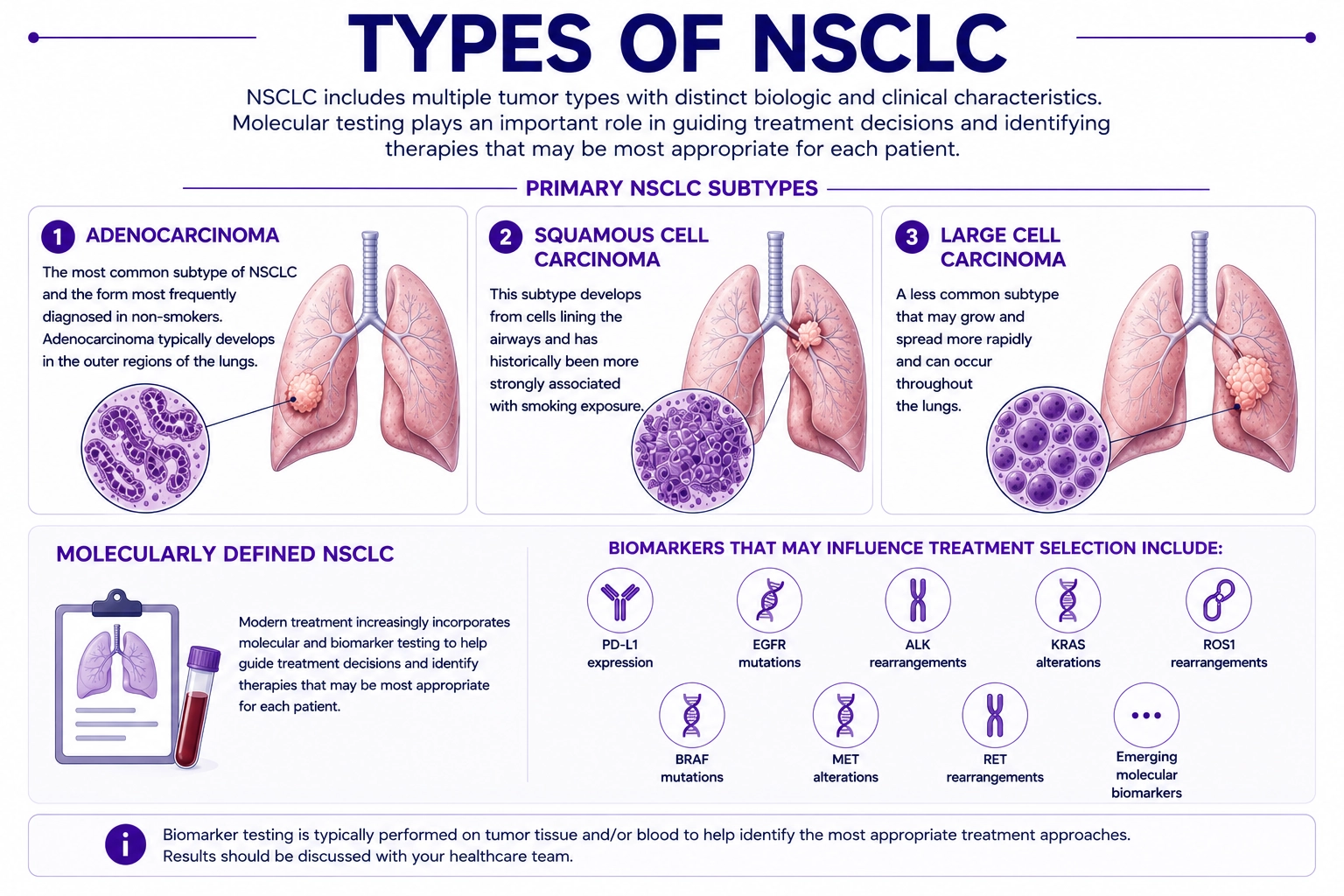
NSCLC includes multiple tumor types with distinct biologic and clinical characteristics.
Adenocarcinoma — The most common subtype of NSCLC and the form most frequently diagnosed in non-smokers. Adenocarcinoma typically develops in the outer regions of the lungs and is often associated with actionable molecular alterations.
Squamous Cell Carcinoma — This subtype develops from cells lining the airways and has historically been more strongly associated with smoking exposure.
Large Cell Carcinoma — A less common subtype that may grow and spread more rapidly and can occur throughout the lungs.
Molecularly Defined NSCLC
Modern treatment increasingly incorporates molecular and biomarker testing to help guide treatment decisions. Biomarkers that may influence treatment selection include:
PD-L1 expression
EGFR mutations
ALK rearrangements
KRAS alterations
ROS1 rearrangements
BRAF mutations
MET alterations
RET rearrangements
Emerging molecular biomarkers
These biomarkers may influence eligibility for immunotherapy and targeted treatment approaches.
— Clinical Presentation
Signs & Symptoms
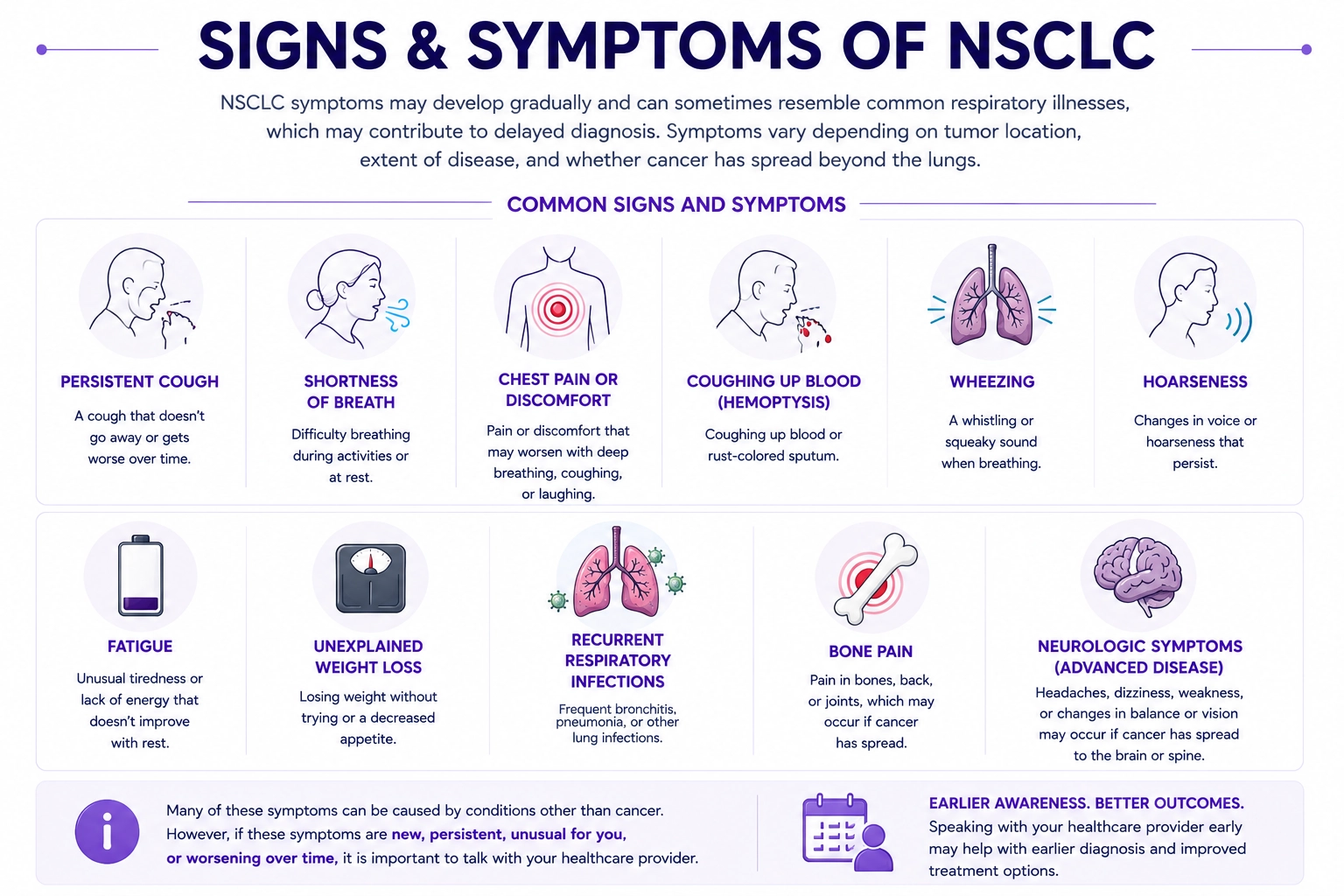
Non-small cell lung cancer (NSCLC) may develop gradually, and early symptoms can sometimes resemble common respiratory conditions or changes associated with aging, smoking history, allergies, or routine illness. As a result, symptoms may not always be recognized immediately and can vary from person to person.
The signs and symptoms associated with NSCLC often depend on where the tumor is located, how large it has become, and whether disease has spread beyond the lungs. Rather than focusing on any single symptom, it is often more helpful to pay attention to symptoms that are persistent, unexplained, worsening over time, or different from your usual baseline.
The figure below highlights some of the more commonly recognized signs and symptoms associated with NSCLC and is intended to support awareness and encourage earlier evaluation.
Importantly, many of these symptoms occur for reasons unrelated to cancer. However, persistent respiratory changes or unexplained symptoms should be discussed with a healthcare provider.
Earlier evaluation may support earlier diagnosis and expand treatment options.
— Prevention & Risk
Risk Factors
Several factors may increase the risk of developing NSCLC, including:
01
Tobacco use and smoking history
02
Secondhand smoke exposure
03
Radon exposure
04
Air pollution
05
Occupational exposures (such as asbestos and certain industrial materials)
06
Family history of lung cancer
07
Prior radiation exposure to the chest
08
Increasing age
Protective factors may include smoking cessation and reducing exposure to environmental risk factors.
— Treatment Landscape
Current Treatment Approaches
— Immunotherapy
Why Immunotherapy?
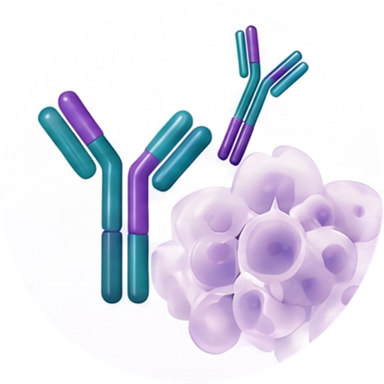
Cancer cells can sometimes avoid immune detection by suppressing normal immune responses through checkpoint pathways such as PD-1/PD-L1 signaling. Immunotherapy is designed to help restore the immune system’s ability to recognize and attack cancer cells.
— The Science Behind It
NSCLC has emerged as one of the leading examples of how immunotherapy may improve outcomes in selected patients. Immune checkpoint inhibitors are increasingly evaluated both alone and in combination with chemotherapy and other treatment approaches to enhance anti-tumor activity. Combination approaches involving immunotherapy together with targeted therapies and antibody-drug conjugates continue to be explored with the goal of improving outcomes for patients across multiple NSCLC treatment settings.
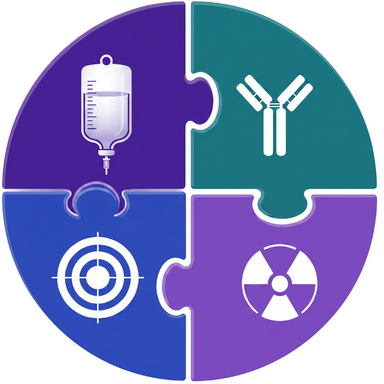
Treatment for non-small cell lung cancer (NSCLC) depends on many factors, including stage of disease, molecular characteristics, PD-L1 expression, overall health, and prior treatments.
SURGERY
Surgery may be used in selected early-stage patients to remove localized tumors.
Surgical approaches may include lobectomy, segmentectomy, or pneumonectomy, depending on tumor location and extent.
RADIATION THERAPY
Radiation therapy may be used alone or with other treatments depending on disease stage and patient factors.
It may be delivered as external beam radiation (EBRT) or, in certain cases, stereotactic body radiation therapy (SBRT).
CHEMOTHERAPY
Chemotherapy uses drugs that travel throughout the body to kill rapidly dividing cancer cells.
It remains an important treatment across multiple stages of NSCLC and is often used in combination strategies.
TARGETED THERAPY
Targeted therapies are designed to block specific genetic alterations or proteins that drive cancer growth.
Used in patients whose tumors have specific molecular alterations such as EGFR, ALK, ROS1, BRAF, MET, or RET.
IMMUNOTHERAPY
Immunotherapy helps the immune system recognize and attack cancer cells by blocking immune checkpoints such as PD-1/PD-L1.
It may be used alone or in combination with chemotherapy, targeted therapy, or other treatments depending on biomarker status and stage.
COMBINATION APPROACHES
Combining therapies may enhance effectiveness and help improve outcomes for selected patients.
Treatment combinations are personalized based on disease characteristics, biomarker results, and patient goals.
A multidisciplinary care team works with each patient to develop the most appropriate treatment plan.
— Liferna Program
Liferna is evaluating investigational immuno-oncology approaches for the treatment of solid tumors, including lung cancer. As part of its broader oncology strategy, Liferna is exploring therapies designed to enhance anti-tumor immune responses and evaluate combination approaches intended to address areas of persistent unmet medical need in NSCLC.